Pattern Recognition Parallels in Poker Opponent Analysis and Slot Reel Dynamics
David Keller · Nov 19, 2026
Pattern Recognition Parallels in Poker Opponent Analysis and Slot Reel Dynamics
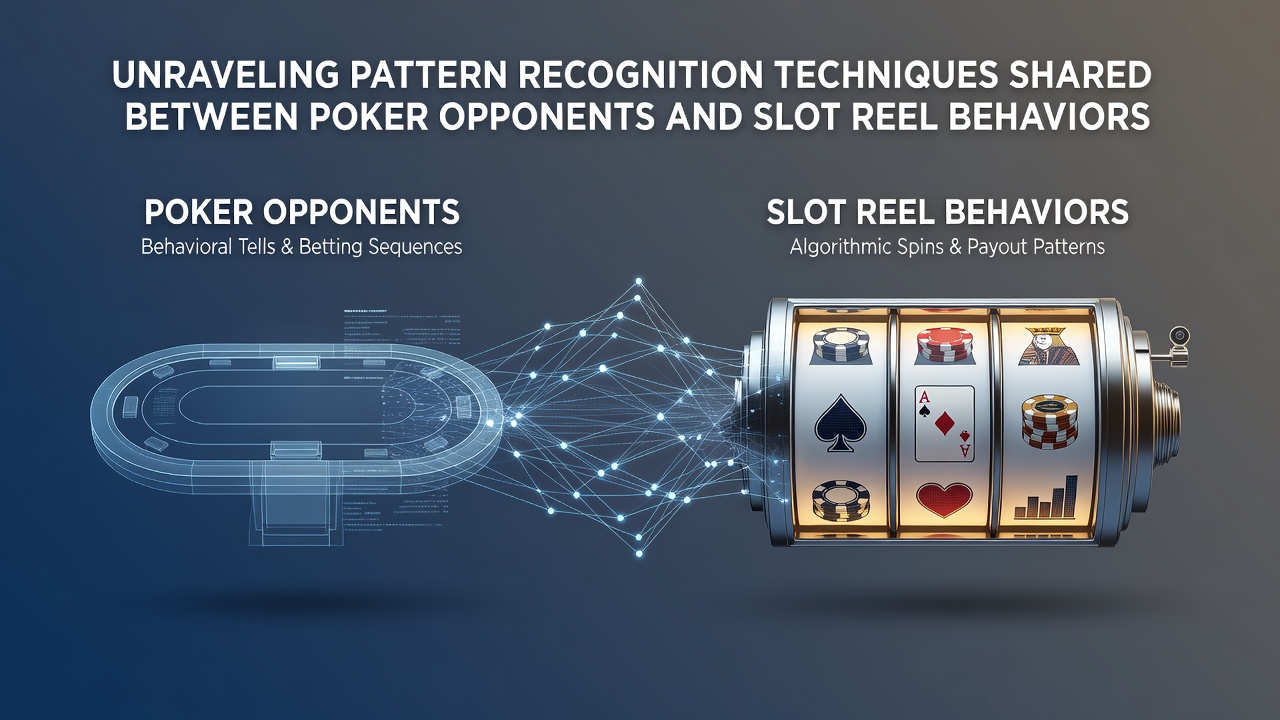
Pattern recognition serves as a core cognitive tool across gambling formats where players observe sequences, anticipate outcomes, and adjust responses based on accumulated data. In poker, participants track betting frequencies, physical tells, and positional tendencies while slot players often examine reel alignments, symbol distributions, and payout intervals despite the underlying random number generators that govern results. Researchers have documented how both environments encourage similar mental frameworks for processing information under uncertainty, yet the reliability of detected patterns varies sharply between skill-based and chance-driven games.
Core Elements of Pattern Detection in Poker
Poker players develop systematic methods for cataloging opponent actions over multiple hands, noting how frequently certain players raise from early positions or fold to continuation bets on specific board textures. Data from behavioral studies indicates that experienced participants maintain mental models of range construction, updating these models as new cards appear and betting rounds progress. Observers note that successful pattern application relies on sample size, because isolated actions rarely provide conclusive evidence whereas repeated behaviors across dozens of hands allow for probabilistic inferences. Those who study decision-making processes find that elite players combine statistical tracking with real-time adjustments, shifting from broad population tendencies toward individualized opponent profiles as session length increases.
Reel Sequence Observation in Slot Environments
Slot machines operate through certified random number generators that produce independent outcomes on each spin, yet players frequently search for recurring symbol clusters or near-miss configurations. Regulatory testing in multiple jurisdictions confirms that reel strips and virtual mapping algorithms prevent predictable sequences, rendering historical spin data irrelevant for future predictions. Nevertheless, cognitive research shows that humans naturally detect illusory correlations when exposed to rapid visual feedback, leading some participants to adjust bet sizes after streaks of wins or losses. Figures from industry audits reveal that modern five-reel video slots contain hundreds of possible symbol combinations per payline, diluting any perceived rhythm that might appear during short play sessions.
Overlapping Cognitive Processes Across Both Formats
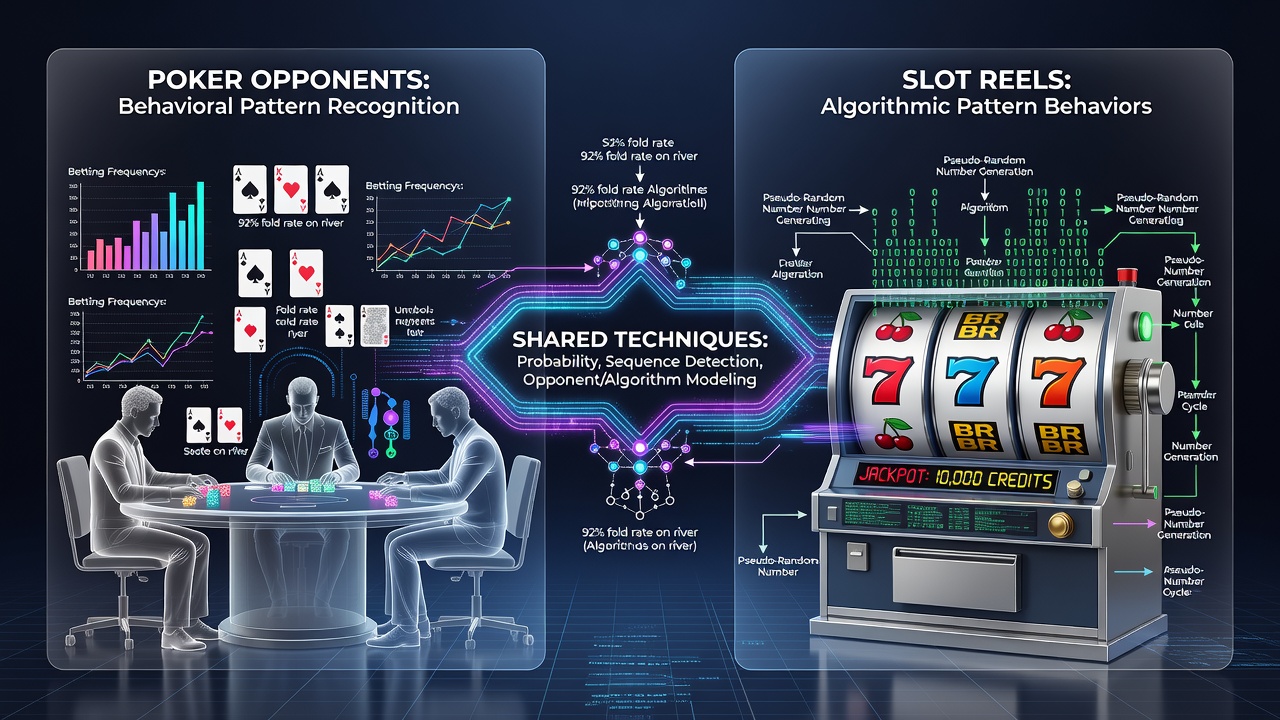
Both poker and slots prompt players to monitor frequency distributions and update expectations based on recent events, creating parallel mental routines even though the underlying mechanics differ. In poker, pattern recognition supports exploitative adjustments such as increasing three-bet frequency against tight blinds or slowing down value bets against calling stations. Slot play, by contrast, involves recognition of payout tables and bonus trigger rates that remain fixed regardless of observed outcomes. Studies conducted at academic institutions across North America and Europe demonstrate that the brain regions associated with reward prediction error activate similarly when individuals track sequences in either setting, suggesting a shared mechanism for processing sequential information. Those who examine decision science note that players often transfer heuristics from one game type to another, applying bankroll segmentation strategies or session timing rules developed at poker tables when they later engage with reel-based games.
Limitations and Distinctions in Practical Application
While pattern recognition yields measurable edges in poker through opponent modeling, the same approach encounters fundamental constraints when applied to certified slot products. Gaming laboratories in Australia and Canada publish independent verification reports confirming that each spin remains statistically independent, eliminating any strategic value in tracking prior reel stops. Poker, however, contains imperfect information where hidden cards and concealed intentions create genuine exploitable patterns over time. Participants who attempt to import streak-based logic from slots into poker tables often encounter resistance because opponent behavior adapts dynamically whereas slot algorithms do not respond to player input beyond random selection. Data collected by European gaming associations indicates that education programs increasingly highlight these distinctions to reduce misapplication of analytical effort across game categories.
Training Methods and Skill Development Pathways
Professional training resources frequently emphasize deliberate practice in pattern identification for poker through hand history review and database software that quantifies action frequencies. Equivalent resources for slots focus instead on understanding volatility indexes and return-to-player percentages rather than sequence prediction. Observers have recorded cases where individuals who honed observational skills at poker tables later applied disciplined record-keeping habits to slot sessions, tracking total wagered amounts and bonus features triggered rather than chasing perceived hot machines. Such cross-application demonstrates how foundational cognitive habits can transfer while the specific targets of observation remain domain-specific. Academic papers examining gambling behavior across multiple continents consistently separate skill-acquisition pathways for table games from informational approaches suited to electronic gaming machines.
Conclusion
Pattern recognition techniques occupy overlapping cognitive territory in poker opponent analysis and slot reel observation, yet their functional value diverges according to game structure. Poker rewards sustained tracking of adaptive human behaviors while slots operate under fixed probabilistic frameworks that render sequence memory ineffective. Regulatory bodies and research institutions continue to document these distinctions through independent testing and behavioral studies, providing clear boundaries for how analytical skills developed in one domain translate or fail to translate when participants engage the other. Understanding these boundaries allows for more precise application of observational methods across gambling formats without conflating skill-based edges with random outcomes.